1914 On April 29, 1914, Hans Kaiser is born in Bochum, the third son and youngest of eleven children of master silk weaver August Kaiser and his wife, Friederike. His eldest sister, Hella Kaiser (1900–1996), with whom he maintains a close relationship throughout his life, becomes an actress at the Braunschweig State Theater.
1921 The stairwell is being painted. The seven-year-old boy discovers that “a little color can change the world.” He is given a box of oil paints and begins to paint. He boards “a train whose doors can no longer be opened.” (Hans Kaiser)
1929 Kaiser leaves his parents’ home at an early age with his siblings Karl, Friederike, and Hannah, and they move into an apartment in another part of the city.
Kaiser begins an apprenticeship as a house painter. His master is impressed by his apprentice’s painterly talent and arranges a special agreement with him: for three weeks, the apprentice must work overtime; every fourth week, he is released from work to paint. In this way, Kaiser earns his journeyman’s certificate.
1933 Kaiser’s earliest dated work (Self-Portrait as a Nude) is created. Like many other works from his early period, the painting is destroyed in an air raid on the city of Bochum in 1944.

1936 Kaiser moves into his first studio in the Bakkes (bakehouse) of the “Hof Stockgrewe” farmstead in Bochum-Querenburg, now located on the grounds of Ruhr University Bochum.
Kaiser is drafted into a motorcycle rifle company. He refuses to bear arms. Thanks to a physician’s intervention, he is discharged as unfit for service. He moves in with his sister Hella in Braunschweig for a year, where he paints portraits of members of the theater ensemble to support himself.
Through countless drawings and watercolors, he advances his self-directed studies. His only point of contact with “degenerate art” is a small booklet on the life and work of Lovis Corinth, published by Delphin-Verlag in Munich in 1920. Until the end of the war, Kaiser devotes himself to portraiture – above all, the self-portrait – and landscape, using painting to explore the Western tradition of painting insofar as it is accessible to him through photographic reproductions.
1939 Friends secure a studio for him first on Marktstrasse in Bochum-Querenburg and later on Trankgasse in the city center.
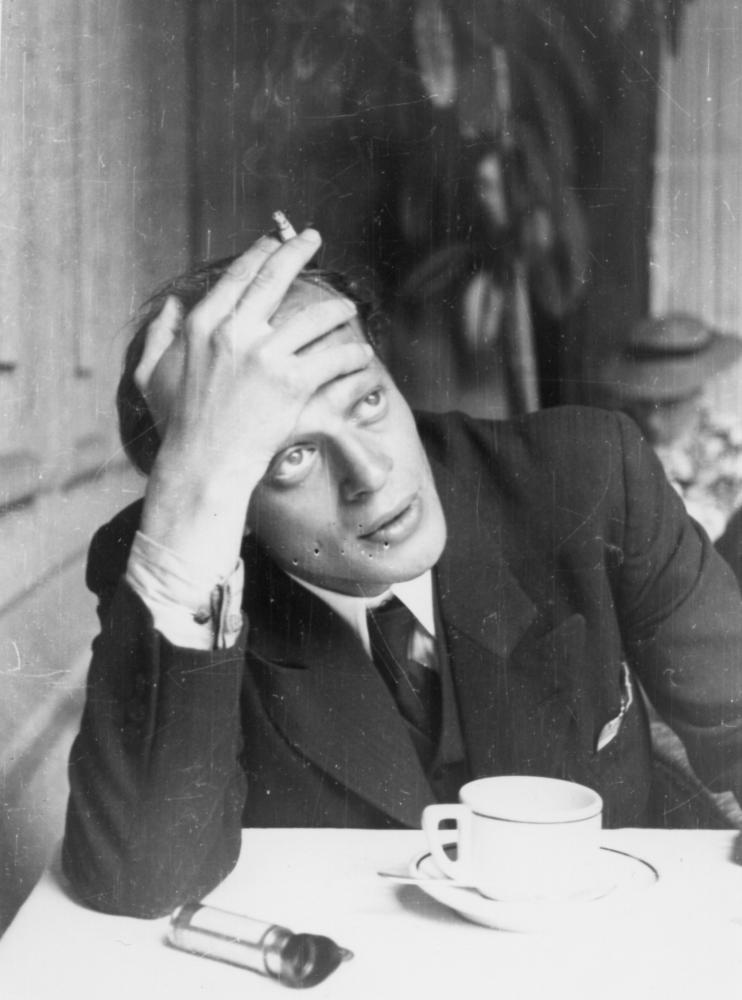
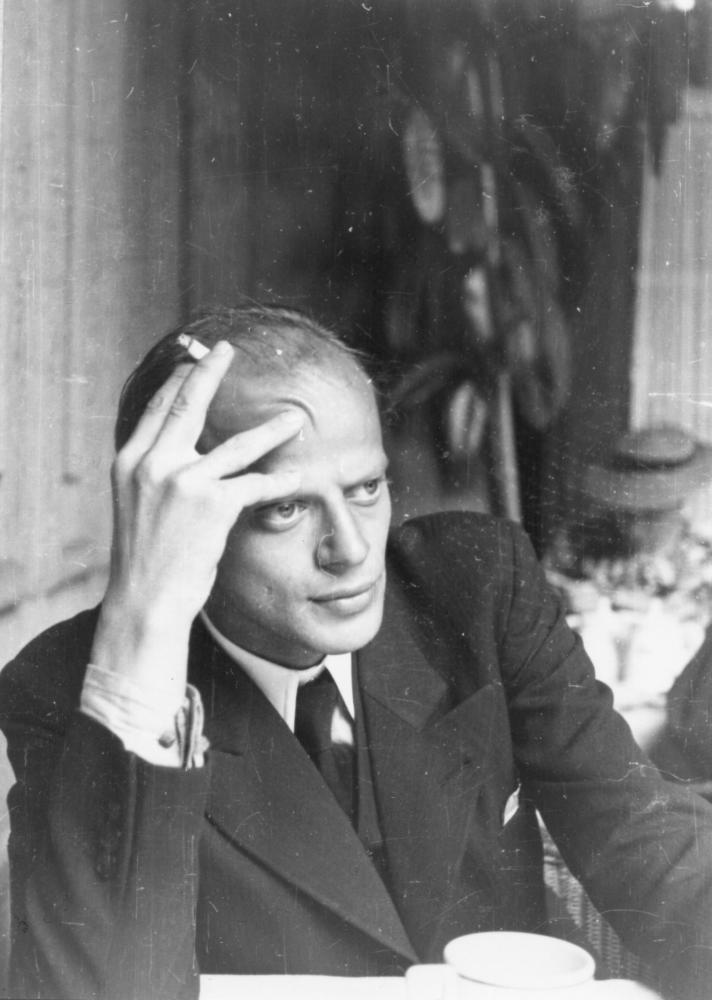
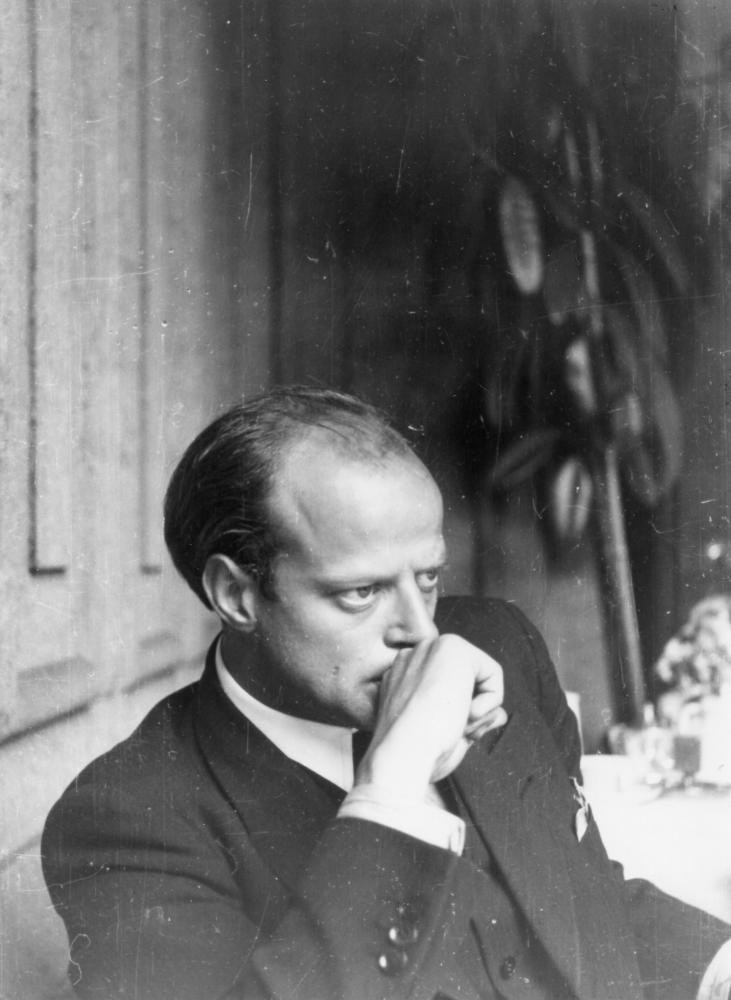
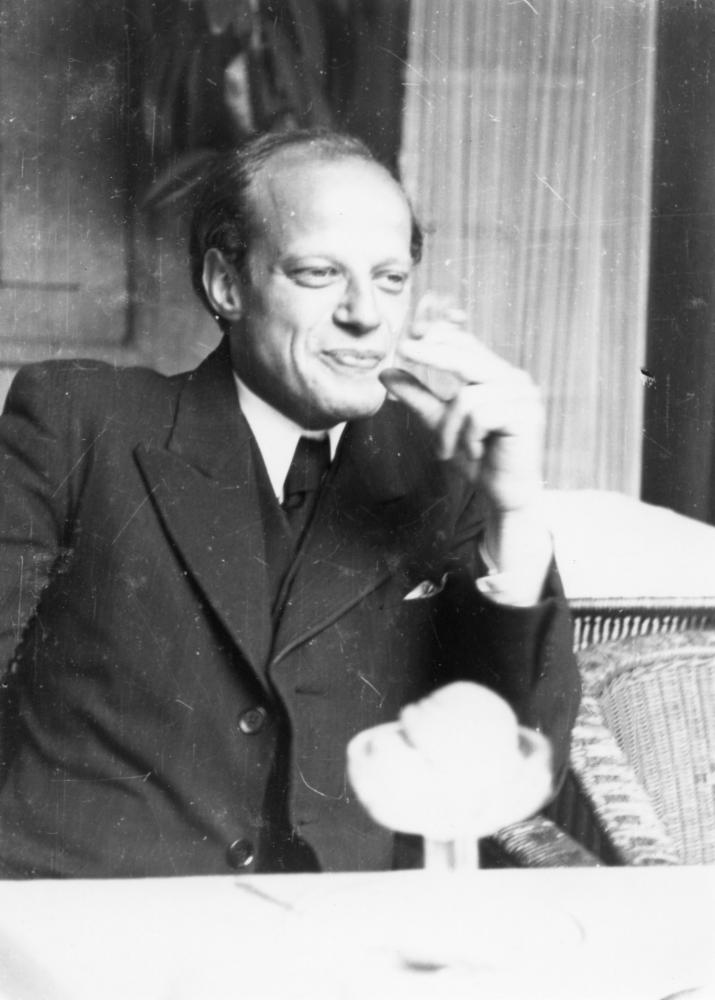
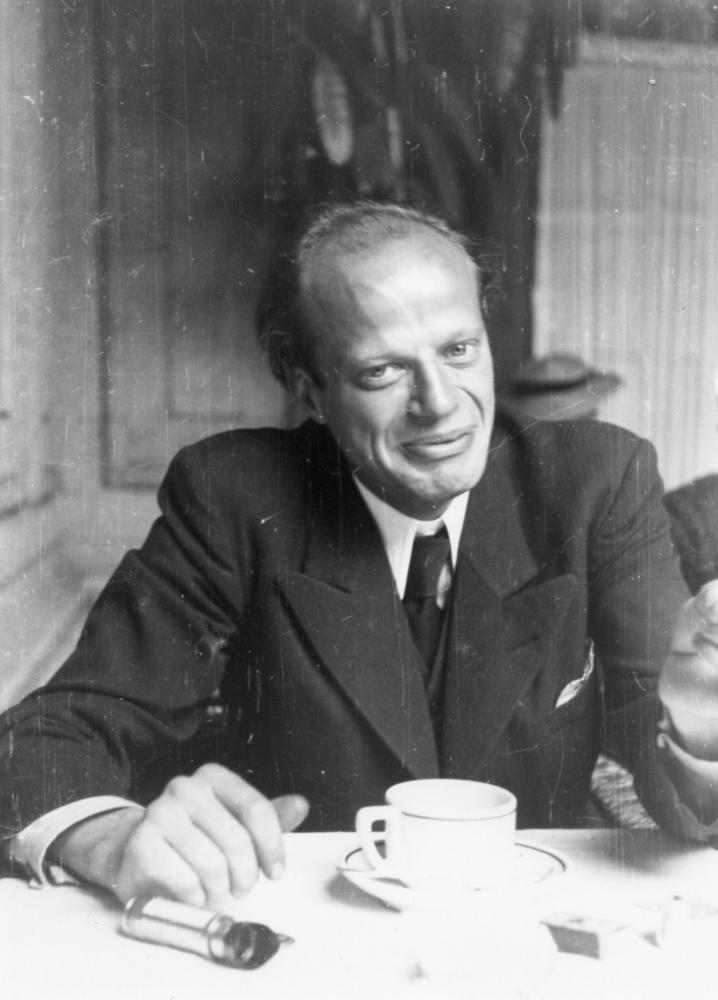
1942 Hans Kaiser marries Hilde Wortmann and moves with her to Eilmsen in the Soest Börde, where they live in the Bakkes (bakehouse) of the Bielefeld farmstead. He retains his studio in Bochum.
1943 Their daughter Barbara is born.
1944 With the exception of a few paintings he has taken with him to the Börde, large parts of Kaiser’s early work and the records of his self-directed studies that had been stored in his Bochum studio are destroyed in an air raid.
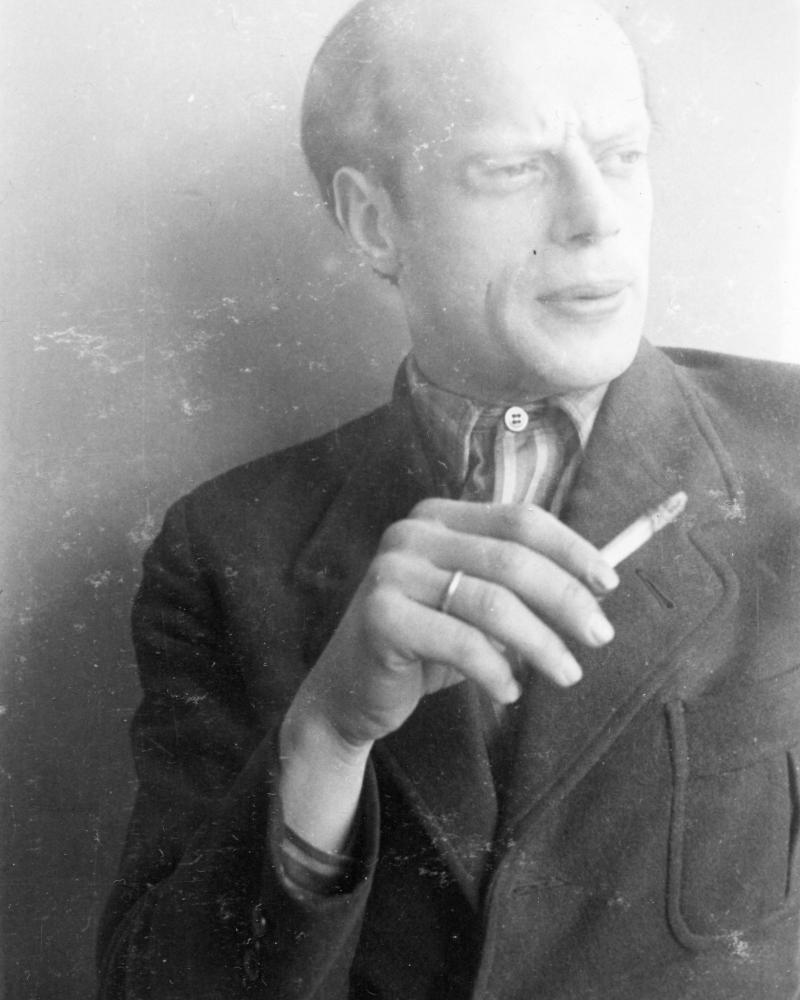
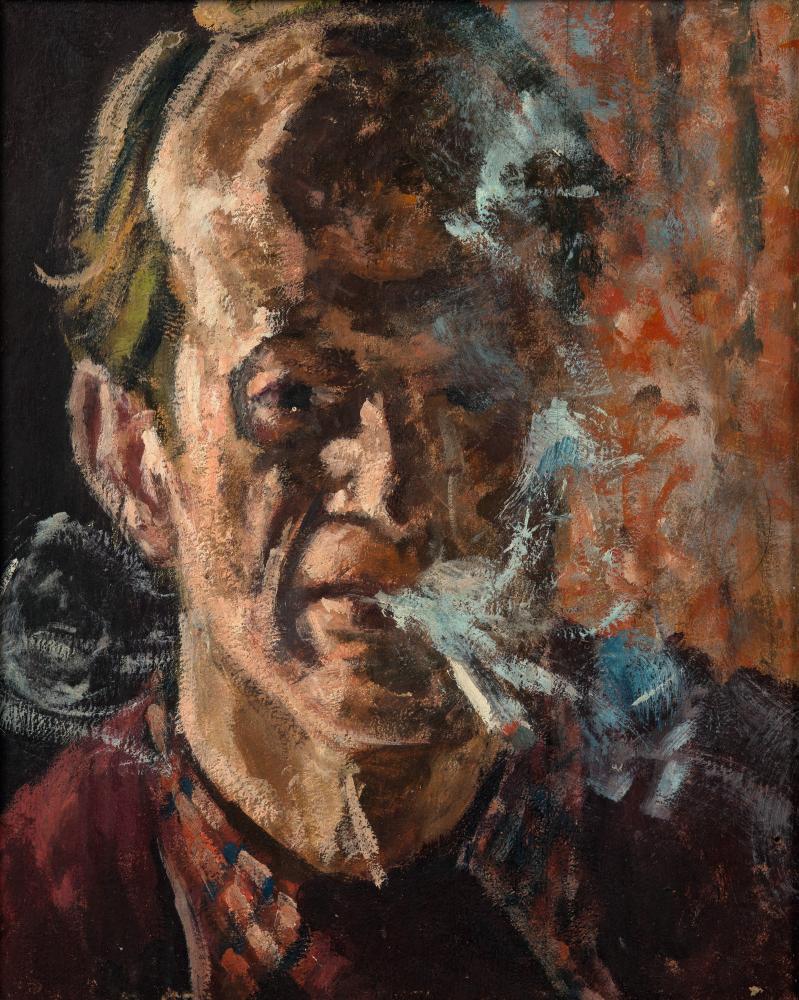
1946 Friends from Westphalia, including many from Hamm and Bochum, establish a “Kaiser Circle” to enable the artist to purchase paint and canvas. They pay a minimum contribution of DM 5 and later receive a work in return.
Kaiser participates in group exhibitions in Ahlen, Hagen, Arnsberg, and Münster.
His daughter Anna Hiltrud is born.
1948 He participates in the “Junger Westen” exhibition in Recklinghausen.
In this and the following years, Kaiser – still unable to afford travel elsewhere in Europe – spends several weeks in Greetsiel, East Frisia, where friends have secured a studio for him. In addition to drawings and watercolors, he produces a series of landscapes in which he attempts to move “from the point to the plane – to space.”
1949 His first solo exhibitions are held at the Municipal Art Gallery in Bochum and the Municipal Gustav Lübcke Museum in Hamm, which at the time is temporarily housed in military barracks. At the opening of the Hamm exhibition, the city managers of Hamm and Soest each offer Kaiser a studio. Because the studio in Hamm is located on the barracks grounds, Kaiser chooses the building of the burned-out brewery belonging to the Schmits farmstead (Jacobiner-Bräu) on Westenhellweg in Soest. With support from the City of Soest, Anneliese Asbeck has it converted into a studio and apartment. Kaiser works there until his death.
In the postwar years, Soest is distinguished by a vibrant cultural life. In theater, art, and literature, the city seeks to bridge the chasm created by the Third Reich and reconnect with international developments.
1950 Kaiser moves with his family into the Soest studio.
1951 Hans Kaiser makes the first of several trips to Paris during the 1950s.
The works that follow show the influence of Cubist painting in particular, although thematically he remains faithful to his early work.
For the now thirty-seven-year-old artist – too young in 1933 to have created an independent body of work and too old in 1945 to be regarded as a young artist – the confrontation with painting produced beyond the reach of National Socialism during the 1930s and 1940s, and the realization that he had been cut off from the intellectual and artistic developments of the West, come as a shock. Following a solo exhibition at the Westphalian State Museum in Münster / Kunstverein Münster, Kaiser decides to refrain from exhibiting in the years ahead, giving himself the time and space to reconnect with his time, largely free of fashions and trends. The works of the 1950s reveal the tremendous effort with which, through painting, he absorbed the “isms” of the twentieth century and transformed them into highly individual pictorial solutions.
1955 Kaiser establishes a glass workshop for his applied works (mosaics and stained-glass windows).
He visits documenta several times.
His son Johannes is born.
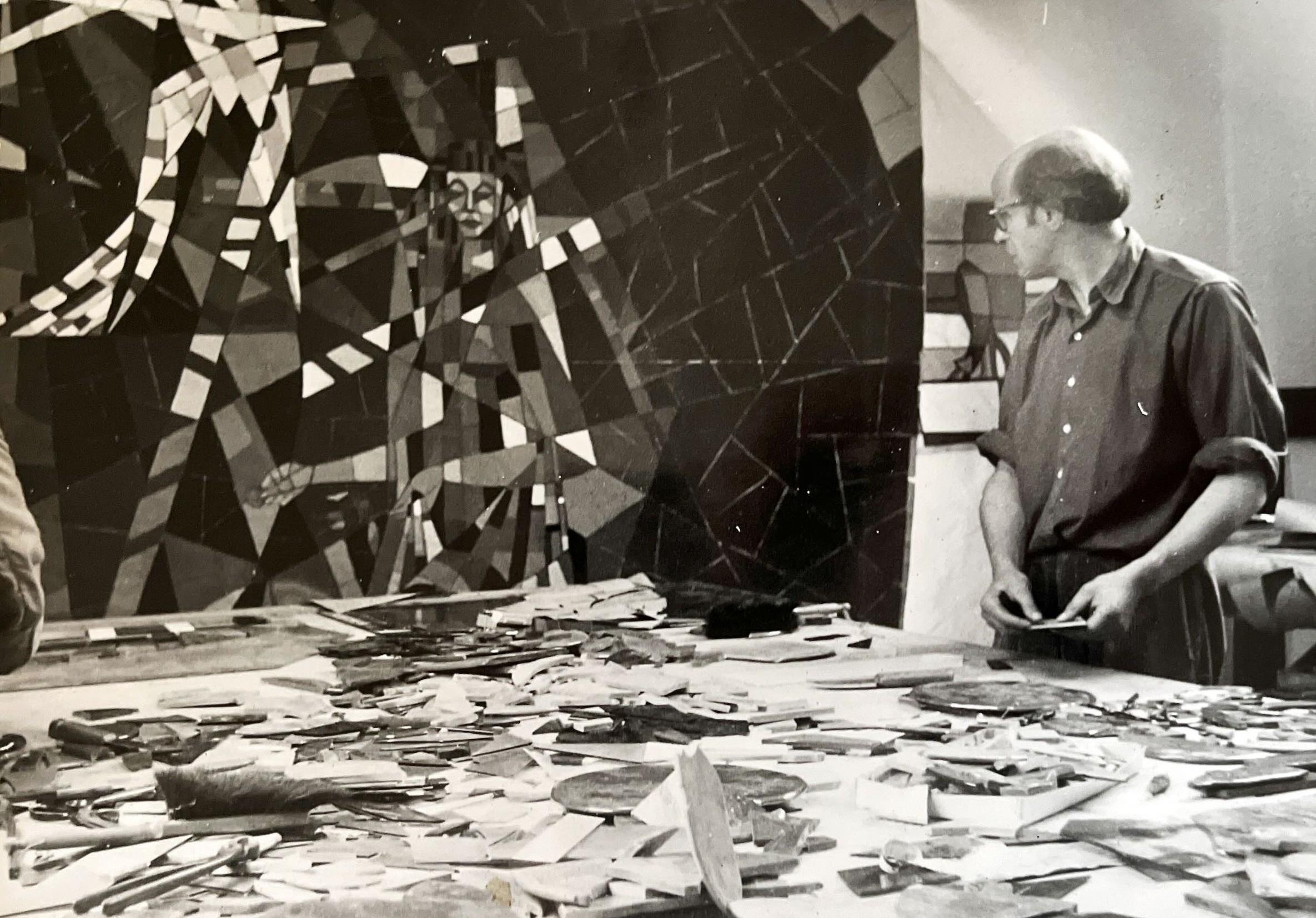
1957 Dissatisfied with his first gestural-abstract pictorial solutions, Kaiser burns a number of paintings. He begins work on his Losschreibungen. They meet his own standards. At the same time, script and writing occupy an increasingly prominent place in his artistic practice. Kaiser himself refers to his texts as “Einschreibungen” (‘inscriptions’).
With the Tondo Windows for the side crypt of St. Patrokli in Soest, Kaiser creates his first leaded-glass windows for a sacred space.
He receives the advancement award associated with the City of Soest’s Wilhelm Morgner Prize (the main prize goes to the painter Irmgart Wessel-Zumloh).
1958 Kaiser begins work on his Brandbilder, some of them large-format works, which he is forced to abandon the following year because of acute, life-threatening nitro poisoning.
1959 In a retrospective solo exhibition at the Gustav Lübcke Museum in Hamm, Kaiser presents his work to the public for the first time in nine years.
Kaiser receives the City of Soest’s Wilhelm Morgner Prize.

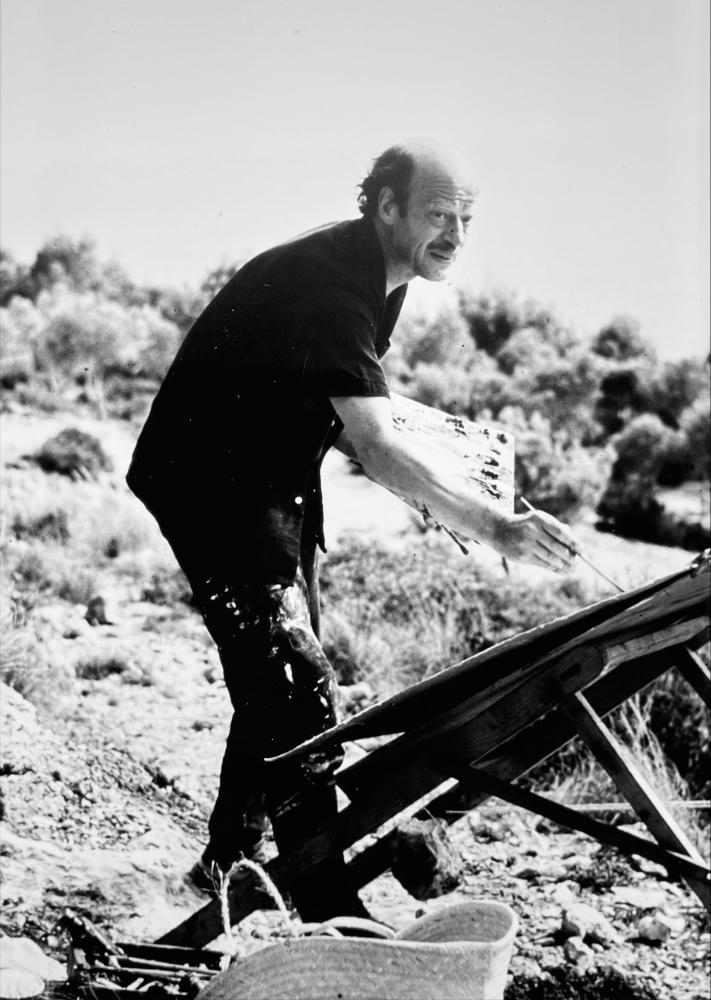
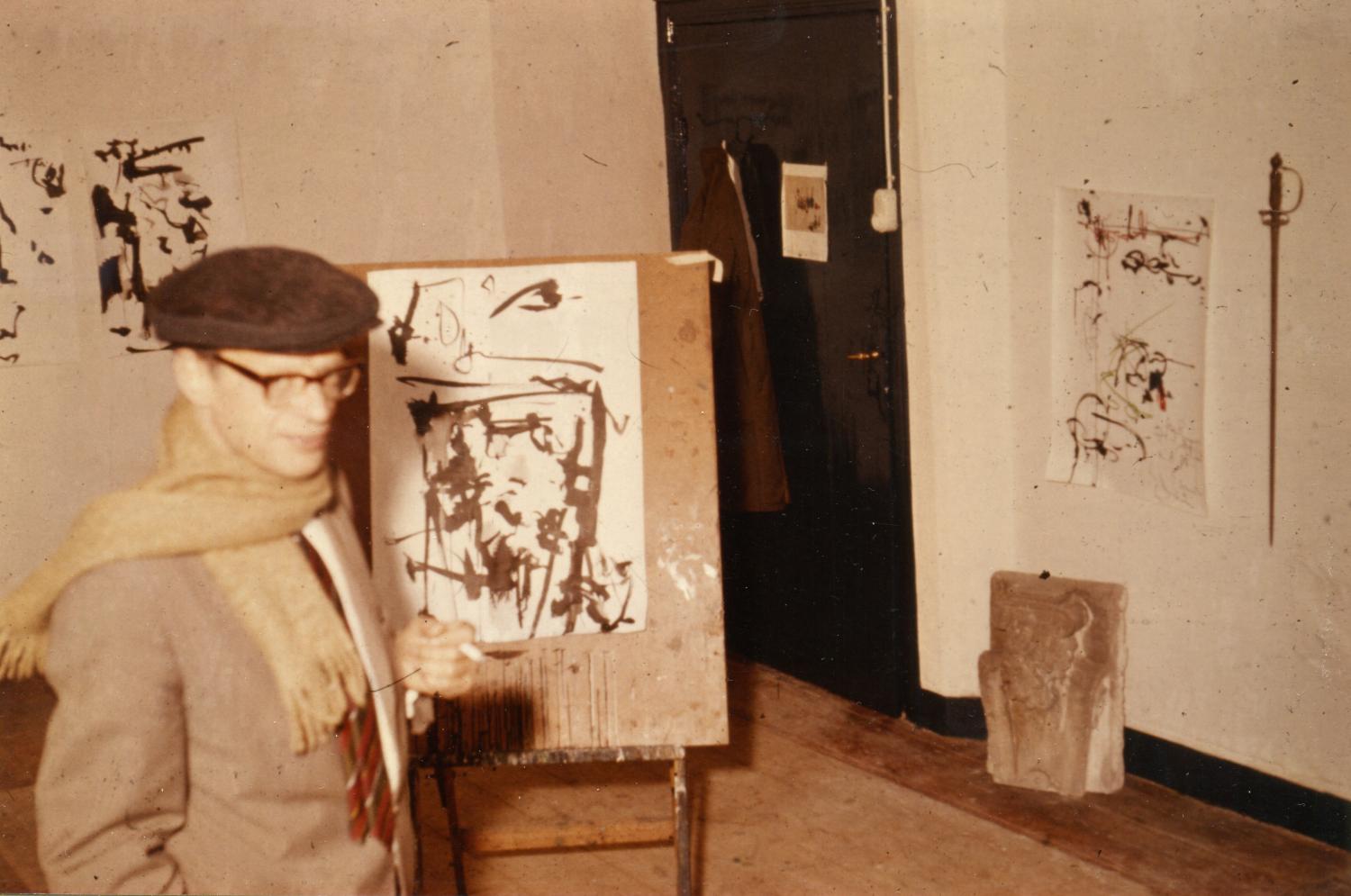
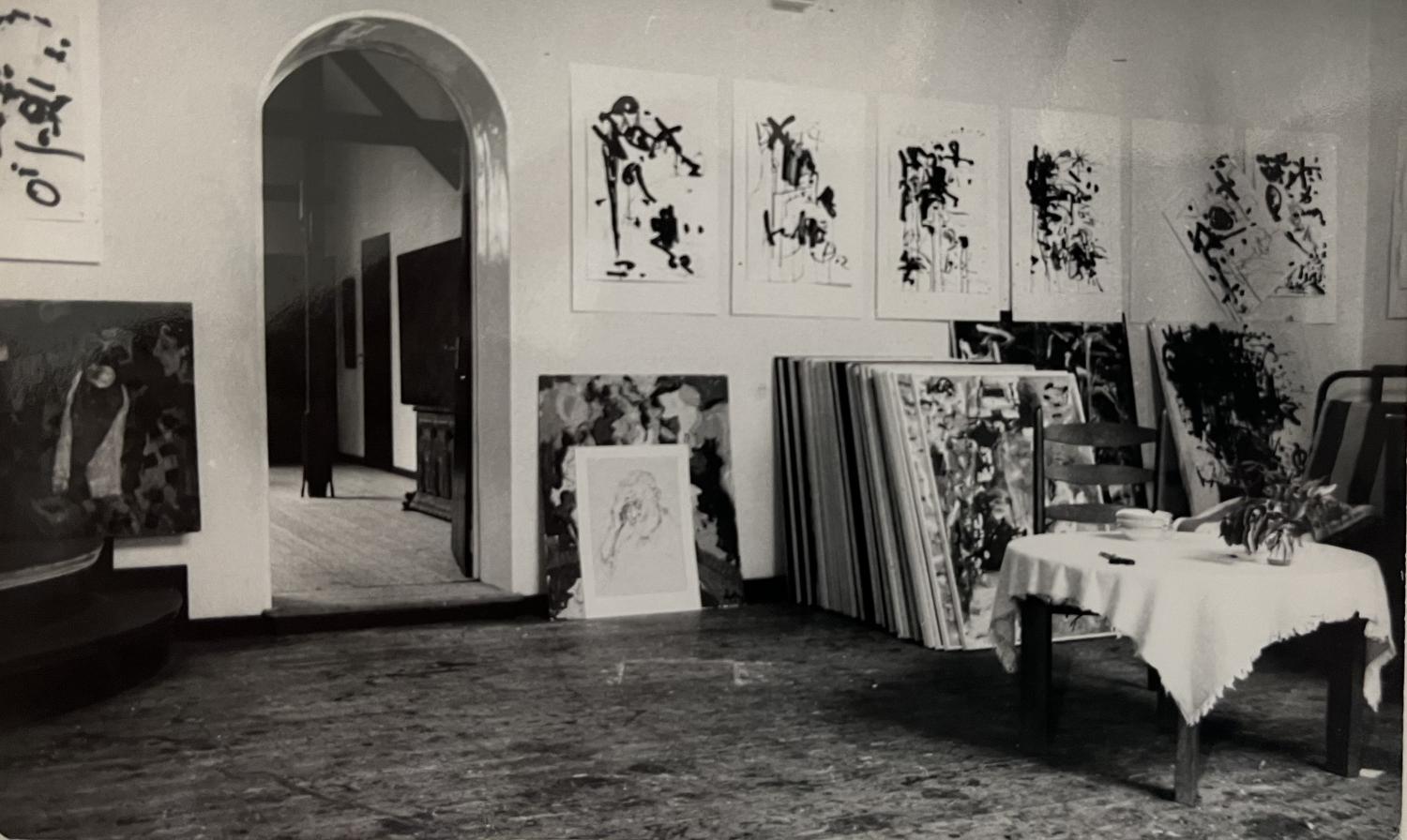
1960 Hans Kaiser travels to Ibiza for his first working stay, where he meets his friend Ernst Meister, who had encouraged him to make the journey. Since he continues to prefer independence to working with a gallery and declines offers of a gallery exhibition, friends and collectors once again make the three-month stay possible by purchasing a painting that has not yet been painted. He produces the first part of the Ibizenkisches Tagebuch (‘Ibiza Diary’) and – as during every subsequent stay on the island – countless portrait drawings that bear witness to the intensity of these encounters. Kaiser returns to the island repeatedly until his death.
In an exhibition at the City Gallery in Soest’s town hall, he presents all the works from that year’s Ibizenkisches Tagebuch (’Ibiza Diary.’)
The art critic John Anthony Thwaites becomes aware of Kaiser’s work and accompanies it as critic and friend until Kaiser’s death.
1961 During his second stay on Ibiza, Hans Kaiser meets the Italian painter Emilio Vedova. Their contact endures, and Vedova later exhibits in Soest through Kaiser’s mediation. Kaiser also begins a friendship with the composer Stefan Wolpe, whose music influences the rhythm of the calligraphy in the Ibiza paintings of the early years.
1962 Kaiser increasingly turns to gouache as well.
He participates in the exhibition Sixteen German Artists, organized by the Corcoran Gallery of Art in Washington and circulated among various exhibition venues in the United States.
Bright spots in the difficult years that follow in Soest are his encounters with the photographer Albert Renger-Patzsch, who lives near Soest in Wamel on the Möhnesee and photographs Kaiser.
After a long hiatus, Kaiser works in East Frisia again, this time in a studio at Manninga Castle in Pewsum. Alongside the continuation of portrait drawings and sketches, within a few weeks he creates the cycle of colored drawings Das Schweißtuch der Veronika (‘The Veil of Veronica’) and an Ostfriesisches Tagebuch (‘East Frisian Diary’), of which only a few works survive.
1963 Hans Kaiser presents the Ibizenkisches Tagebuch (’Ibiza Diary’) at the municipal gallery in the Hôtel de Ville in Troyes, France. In the years that follow, he creates major works for public and sacred spaces.
1964 The ribbon window in dalle de verre concrete is created for St. John’s Church in Soest.
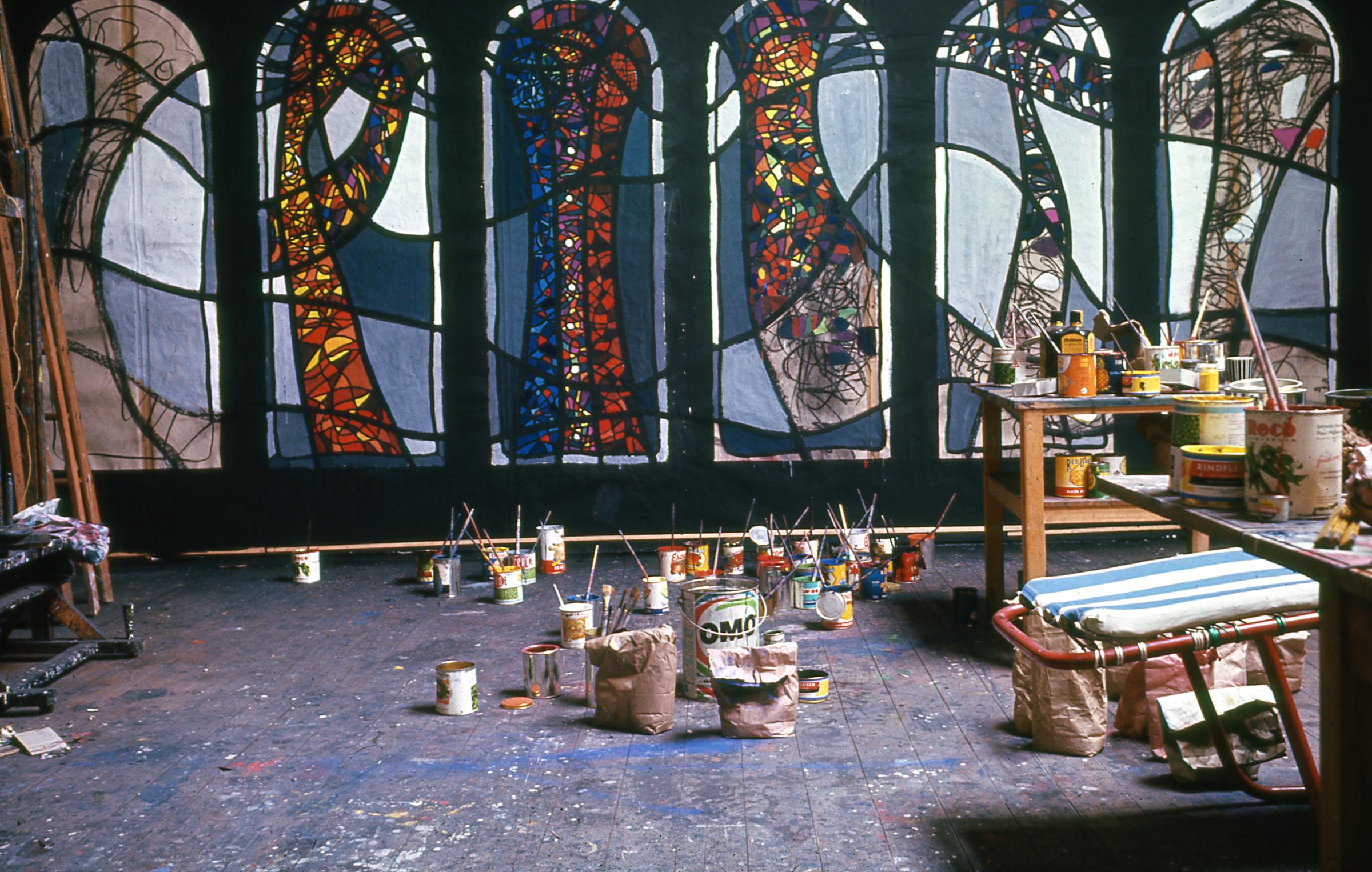
Between 1964 and 1966, thirty-four leaded-glass windows and ten rose windows are created for the chapel of the motherhouse of the Vincentian Sisters in Paderborn. As always, Kaiser prepares the designs at a scale of 1:1 and, whenever his Soest studio does not provide sufficient space, sets up a studio on site.
1965 After three years, Kaiser returns to Ibiza. For several years, during his stays there, he works in Emilio Vedova’s studio in the old town. There he concludes the Ibizenkisches Tagebuch (’Ibiza Diary’) with the painting Ibiza 1960, 1961, 1965 und was aus mir wurde (‘Ibiza 1960, 1961, 1965 and What I Have Become’).
He participates in the exhibition Contemporary Painting in Germany at the Auckland City Gallery in New Zealand (with Geiger, Mack, Piene, Schumacher, Thieler, and others).
1966 Through Emilio Vedova’s mediation, Kaiser works in Venice for a time and creates the cycle Venedig, Bildnis einer Stadt (’Venice – Portrait of a City’).
The Märkisches Museum in Witten and the Kunstverein Oldenburg present a survey of Hans Kaiser’s work.
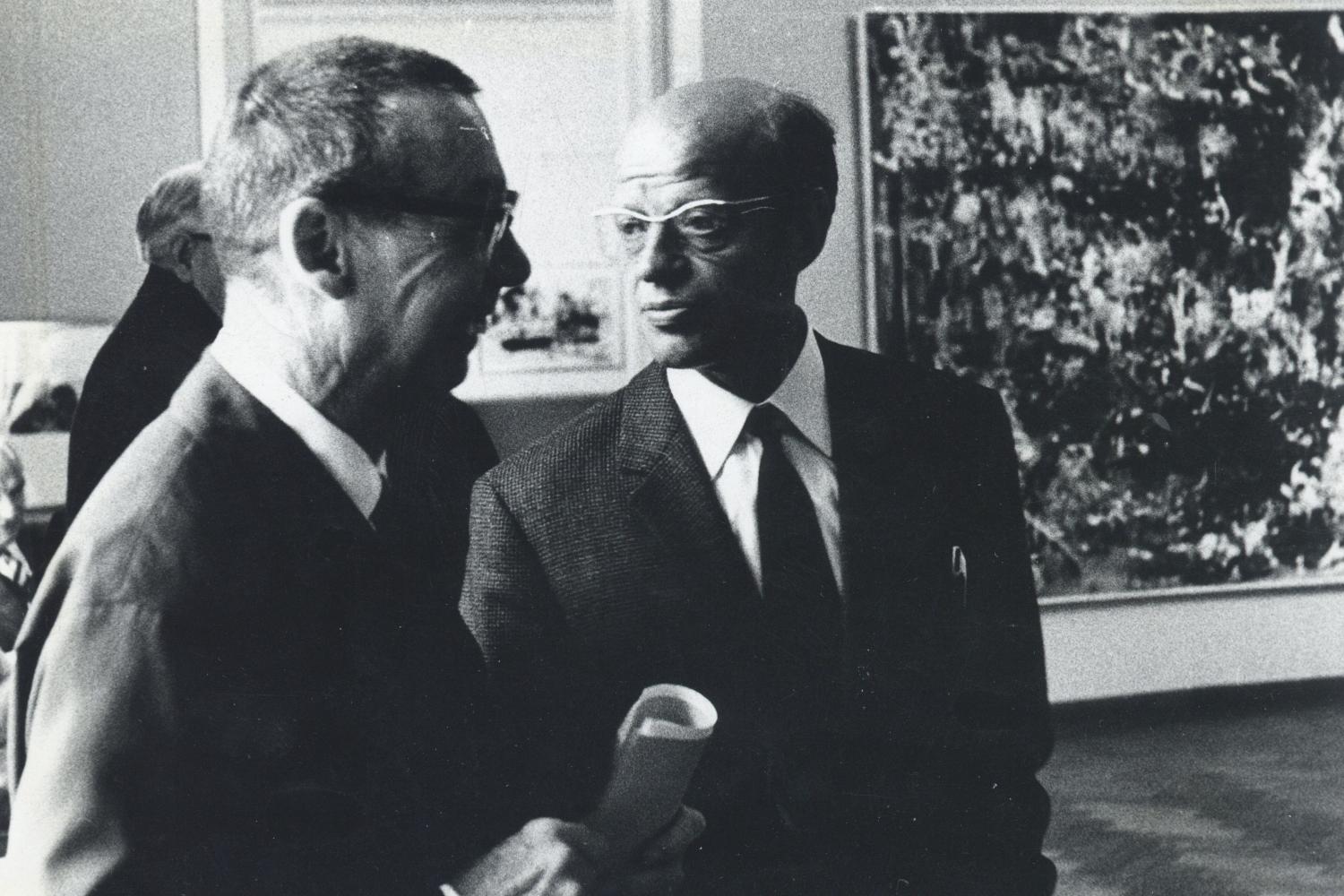

1970 Kaiser receives the commission for a glass mosaic in the Langer Eugen parliamentary high-rise in Bonn.
1972 The Wilhelm Morgner House in Soest presents new works by Hans Kaiser created on Ibiza. At this time, Kaiser has set up his studio in the studio of the architect Josep Lluís Sert.
1973 Hans Kaiser decides to cease participating in group exhibitions. He regards the now-intense competition of the art market, often particularly evident in group exhibitions, as a constraint on his artistic freedom and creative energy. He prefers to continue intervening in the art world as a “figure on the margins,” through direct contact with collectors and through his sometimes monumental works in public space – commissions for which he likewise no longer enters competitions.
That year he spends eight months on Ibiza and travels to the United States for the first time, visiting New York and Washington to see Washington National Cathedral, for which he has received a commission for a three-part leaded-glass window.
1974 Kaiser spends several weeks working in Tehran, where he is to design a mosaic wall for the residence of the German ambassador.
1976 Kaiser travels to Tehran again to oversee the installation of the mosaic. Probably influenced in part by this journey, he begins work on the Imaginäre Räume (’Imaginary Spaces’), his final work phase.
He is awarded the Konrad von Soest Prize.
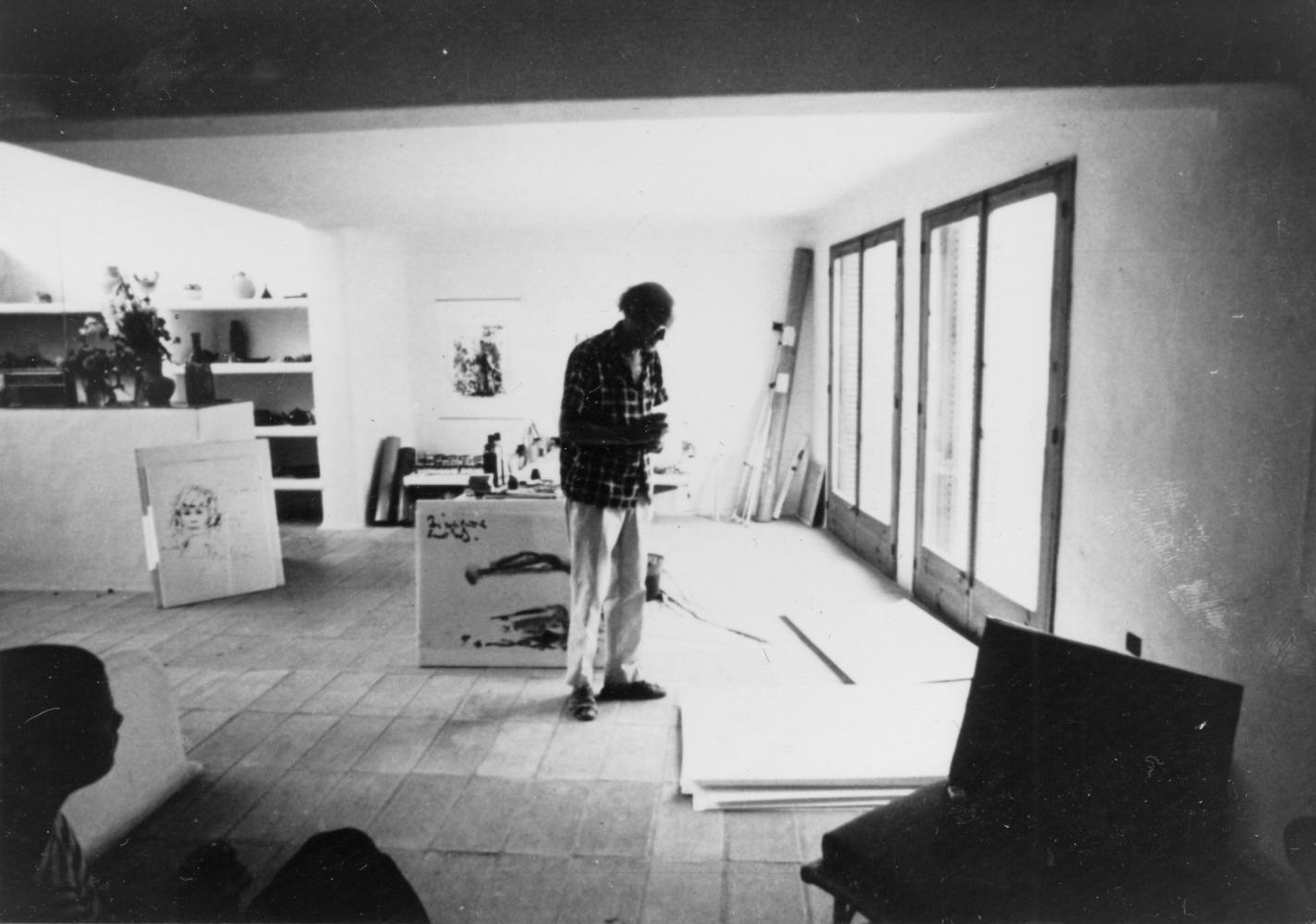
1977 Hans Kaiser spends several weeks on the Greek island of Santorini. Enthralled, he plans to establish a studio there as well.
1978 Kaiser first acquires a studio of his own on Ibiza at Cap Martinet, a hill developed by the architect Josep Lluís Sert and where Kaiser had begun the Ibizenkisches Tagebuch (‘biza Diary’). Because he receives a commission that year for another window in Washington, he must postpone his plans for a studio on Santorini and return to Soest for many months.
1979 On Ibiza, Kaiser creates the painting Die irdene Schale (’The Earthen Bowl’), a central work in his late oeuvre.
From December 1979 to January 1980, the Wilhelm Morgner House in Soest presents the retrospective Paintings from 1938–1979, with particular emphasis on the early work and the Ibiza paintings. During the exhibition, the artist becomes seriously ill. He soon learns that he does not have much time left.
The art critic John Anthony Thwaites publishes the first monograph on Hans Kaiser.
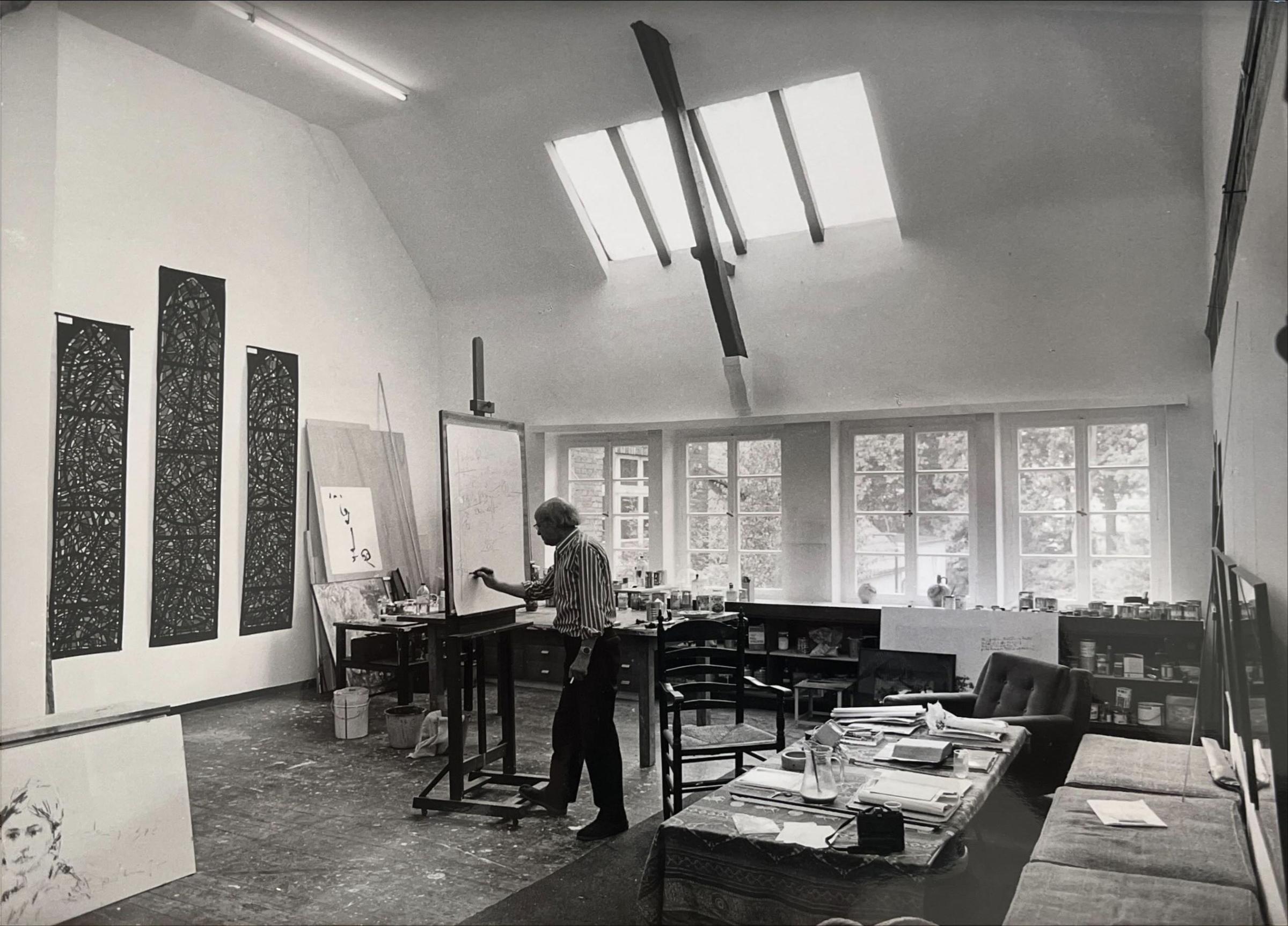
1980 Despite the rapidly progressing illness, Hans Kaiser travels to Ibiza several more times and completes the design for his second three-part window for Washington National Cathedral. He is no longer able to oversee its installation.
1981 He prepares the extensive retrospective for the Märkisches Museum in Witten, which opens in December 1981, and adds approximately fifty works – some of them large-format – to the cycle of Imaginäre Räume ('Imaginary Spaces'), among other projects.
1982 Hans Kaiser dies on October 2 in his studio house in Soest.

This biography is a revised version of Anna H. Berger-Felix’s contribution "Biographie", in: Hans Kaiser. In den Raum geschrieben. Bilder 1952-1968. Arbeiten auf Papier. ed. by Ellen Schwinzer and Anna H. Berger-Felix (exh. cat. Gustav-Lübcke-Museum Hamm, February 8–March 29, 1998; Stadtmuseum Beckum, February 8–March 29, 1998). Hamm 1998, S. 33-37.
Translation: Johannes Kaiser-Wortmann